

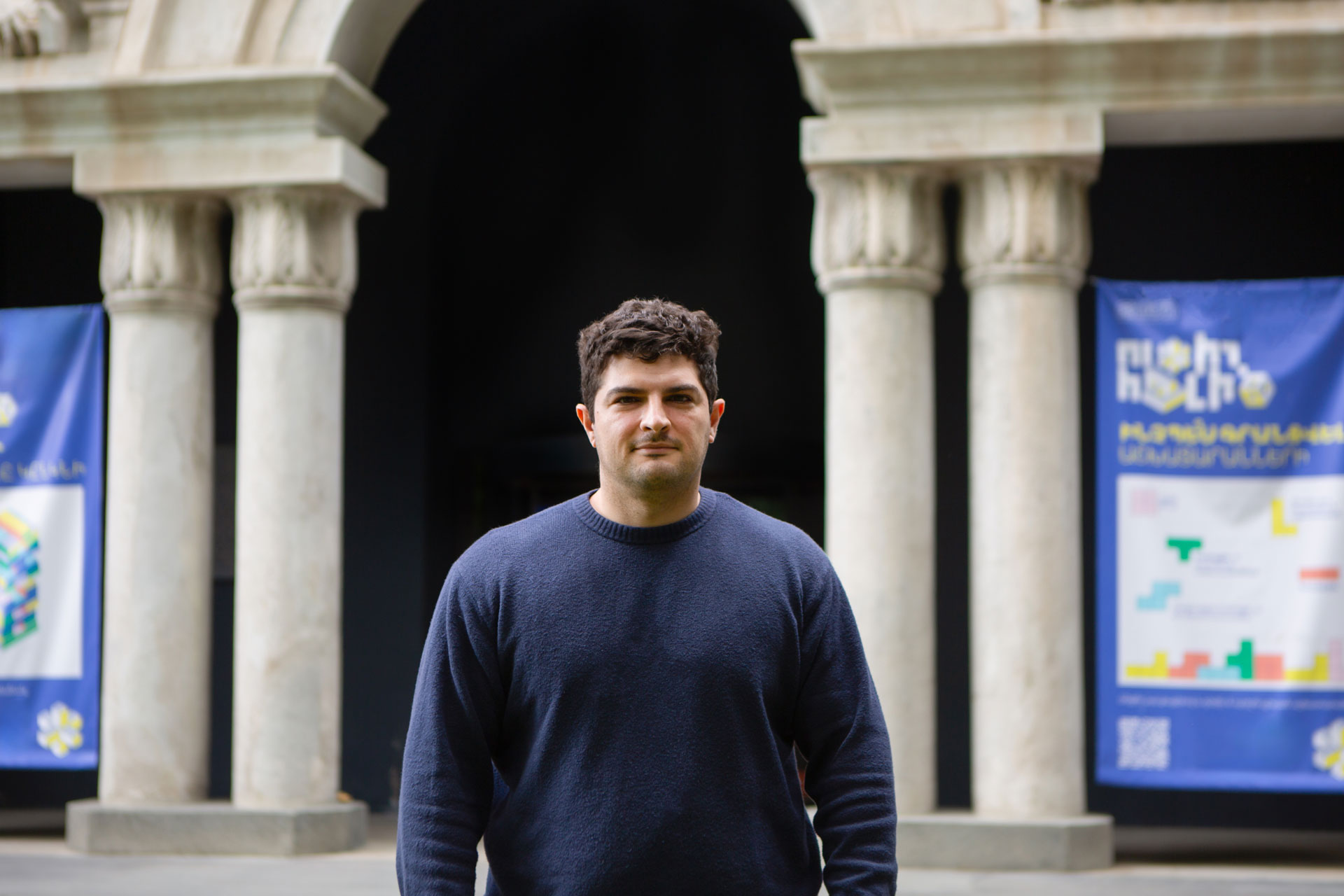
This Alt July, TUMO Yerevan and TUMO Gyumri hosted AI research engineer Andronik Mkrtytchev from Lockheed Martin, who held learning labs and shared a glimpse into what it means to work at one of the world’s most advanced tech companies. Lockheed Martin is a leading American aerospace and defense technology company specializing in aviation, space technologies, defense systems, and information security. The company collaborates with NASA and other space agencies. Naturally, we couldn’t miss the chance to ask him our traditional 3.5 questions.
Tell us about Lockheed Martin and your role there.
I’m an AI research engineer, which means I design and implement advanced AI solutions and integrate them into real-world systems. My work combines research with application. I focus on finding smart ways to automate time-consuming, repetitive tasks and improve operational efficiency. Sometimes that means using computer vision for inspections, other times it’s about building AI agents that help people work with complex data more easily. It’s about making machines work smarter, not harder.
What does the future of AI look like, and why should teens be learning it now?
AI is becoming part of every field you can think of. Agriculture, medicine, transportation, even biotech. That’s why teens should start learning AI today. It’s not just about coding or building models. It’s about understanding the building blocks of the future. Whether they want to dive deep into how large language models are built or just use those models to boost productivity in their daily lives, the skills they gain will be essential in whatever future they choose to build.
What excites you most about your work?
I’ve always been curious. In school, I loved jumping between subjects and digging into how things worked. That energy stuck with me. One of the best parts of working in AI is that the learning never stops. The field evolves so quickly that you’re always chasing something new, always stretching yourself. I also love watching an idea turn into a working product, then seeing that product actually help someone. That moment of impact is incredibly rewarding.
Fun fact
Before all this, I was a competitive tennis player. I played in tournaments across Florida and, for a while, was ranked in the top 50 statewide in the 14–16 age category. Turns out training your body and training algorithms have more in common than you’d think.